On this page
Key takeaways
- Chess is played on an 8×8 board. Each side starts with 16 pieces: 8 pawns, 2 rooks, 2 knights, 2 bishops, 1 queen, and 1 king.
- The goal is checkmate: attacking the enemy king so it has no escape.
- Piece values: pawn 1, knight 3, bishop 3, rook 5, queen 9. The king is priceless.
- Three opening principles: control the center, develop knights and bishops, and castle early.
This guide teaches you how to play chess from zero, step by step: from setting up the board to playing your first full game correctly. Every section has diagrams you can step through, and key terms link to the chess glossary.
Prefer to watch? The full lesson is at the top of the page. Pipion explains every piece in eight minutes.
1The board and the starting position
A chessboard has 64 squares, 8 files by 8 ranks, in alternating light and dark colors. Files are lettered a–h, ranks numbered 1–8, so every square has a name, such as e4.






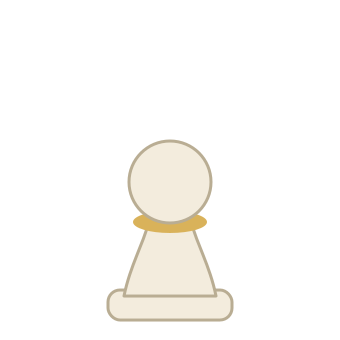
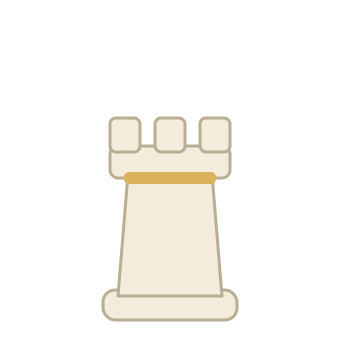

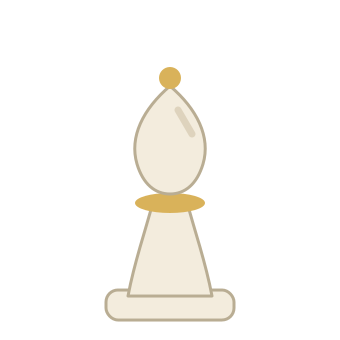
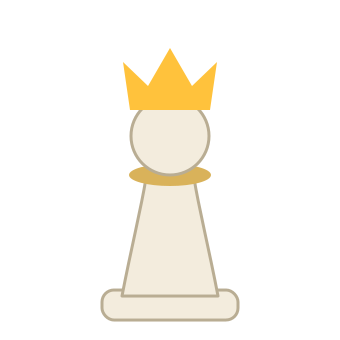
Each side starts with 16 pieces: eight pawns, two rooks, two knights, two bishops, one queen, and one king. White always moves first.
- Turn the board so the bottom-right square is light.
- Rooks in the corners, knights next to them, then bishops.
- Queen on her own color: the white queen on d1, the black queen on d8.
- The king takes the remaining square.
- Fill the row in front with pawns.
2How the pieces move
There are six kinds of pieces. Here is each one in a single line. For full diagrams of every piece, read How Each Chess Piece Moves.
| Piece | How it moves | How it captures |
|---|---|---|
| Pawn | Forward one square (two on its first move), never backward | One square diagonally forward |
| Rook | Straight lines, any distance | Same as it moves |
| Bishop | Diagonals, any distance | Same as it moves |
| Knight | An L shape, and it can jump over pieces | Same as it moves |
| Queen | Straight lines and diagonals, any distance | Same as it moves |
| King | One square in any direction | Same as it moves |
 Short · 0:44 · 224 viewsThe Knight Is the Only Piece That Can JumpWatch the Short →
The king can never move into check, which also means the two kings can never stand next to each other.
3What each piece is worth
Point values help you decide whether a trade is good.
| Piece | Value |
|---|---|
| Pawn | 1 |
| Knight | 3 |
| Bishop | 3 |
| Rook | 5 |
| Queen | 9 |
| King | Priceless |
Giving up a knight (3) to win a rook (5) gains two points. Giving up a rook for a knight loses two. The king has no value because losing it means losing the game.
 Short · 0:47 · 166 viewsThe Pawn's First Day at WorkWatch the Short →
4Three special rules
These three rules make beginners think their opponent is cheating. All of them are legal.
Castling
Castling moves the king two squares toward a rook, and the rook jumps over the king. The king and rook must not have moved, nothing may stand between them, the king may not be in check, and the king may not pass through or land on an attacked square.
1.e4e52.Nf3Nc63.Bc4Nf64.
En passant
If an enemy pawn moves two squares and lands right next to your pawn, you may capture it as if it had moved only one. This is en passant, and it is only allowed on the very next move.
1.e4a62.e5d53.
Promotion
A pawn that reaches the last rank must become a queen, rook, bishop, or knight. Almost everyone picks a queen. See promotion.
All three rules, plus four more that look illegal, are in the second lesson:
5Check, checkmate, and draws
Check means the king is under attack. The player in check must get out of it immediately: move the king, block the attack, or capture the attacker.
Checkmate means the king is attacked and cannot be saved. The game is over, and the player who delivered checkmate wins.
1.
A game can also end in a draw. The one that surprises beginners most is stalemate: the player to move is not in check but has no legal move.
| Situation | King in check? | Any legal move? | Result |
|---|---|---|---|
| Check | Yes | Yes | Game continues |
| Checkmate | Yes | No | Loss |
| Stalemate | No | No | Draw |
6Opening principles
You do not need to memorize openings to play well. Follow these five principles in your first ten moves:
- Control the center. Start with the e-pawn or d-pawn (1. e4 or 1. d4).
- Develop your knights and bishops before moving the same piece twice.
- Castle early to keep your king safe and bring a rook into play.
- Don’t bring your queen out too early. An early queen is easy to chase around.
- Leave your f-pawn and g-pawn alone early on. They protect your king.
1.2.3.4.
Every beginner wants to attack with the queen on move two. Every opponent is delighted. Develop first. The queen can wait.
7What to do next
You know the rules. Now it is time to practice:
- Train your eye every day with the daily chess puzzle: one new position a day, from easy to hard, with hints and explanations.
- Learn basic tactics in the chess glossary, starting with the fork and the pin.
- Watch the lessons in order on the Series page.
- Read deeper explanations on the Pipion blog, starting with 7 chess moves that look illegal.
Frequently asked questions
Where should a beginner start learning chess?
Start with the board and how each piece moves, then learn check and checkmate. After that, move on to opening principles and simple tactics like forks and pins. This guide follows that order.
Is chess hard to learn?
The basic rules can be learned in an afternoon. Strategy and tactics take longer, and they come faster with short, regular practice, such as one puzzle a day.
What is a good first move for beginners?
A move that controls the center, such as pushing the e-pawn or d-pawn two squares (1. e4 or 1. d4). Avoid pushing the f-pawn and g-pawn early in the game.
What is the difference between check and checkmate?
Check means the king is attacked but can still be saved. Checkmate means the king is attacked and there is no legal move to save it, so the game is over.